


Protein purification is still a major bottleneck in research.
For many labs, purified protein still depends on chromatography systems, recurring resin and column costs, protease cleanup, and workflows that require specialized downstream expertise. That makes protein purification slower, more expensive, and harder to scale.
This bottleneck is becoming even more visible in the age of AI-assisted protein design.
Researchers can now design and prioritize protein candidates faster than before, but those proteins still need to be expressed, purified, and validated in the wet lab. As design speeds up, purification increasingly becomes one of the practical limits on experimental throughput.
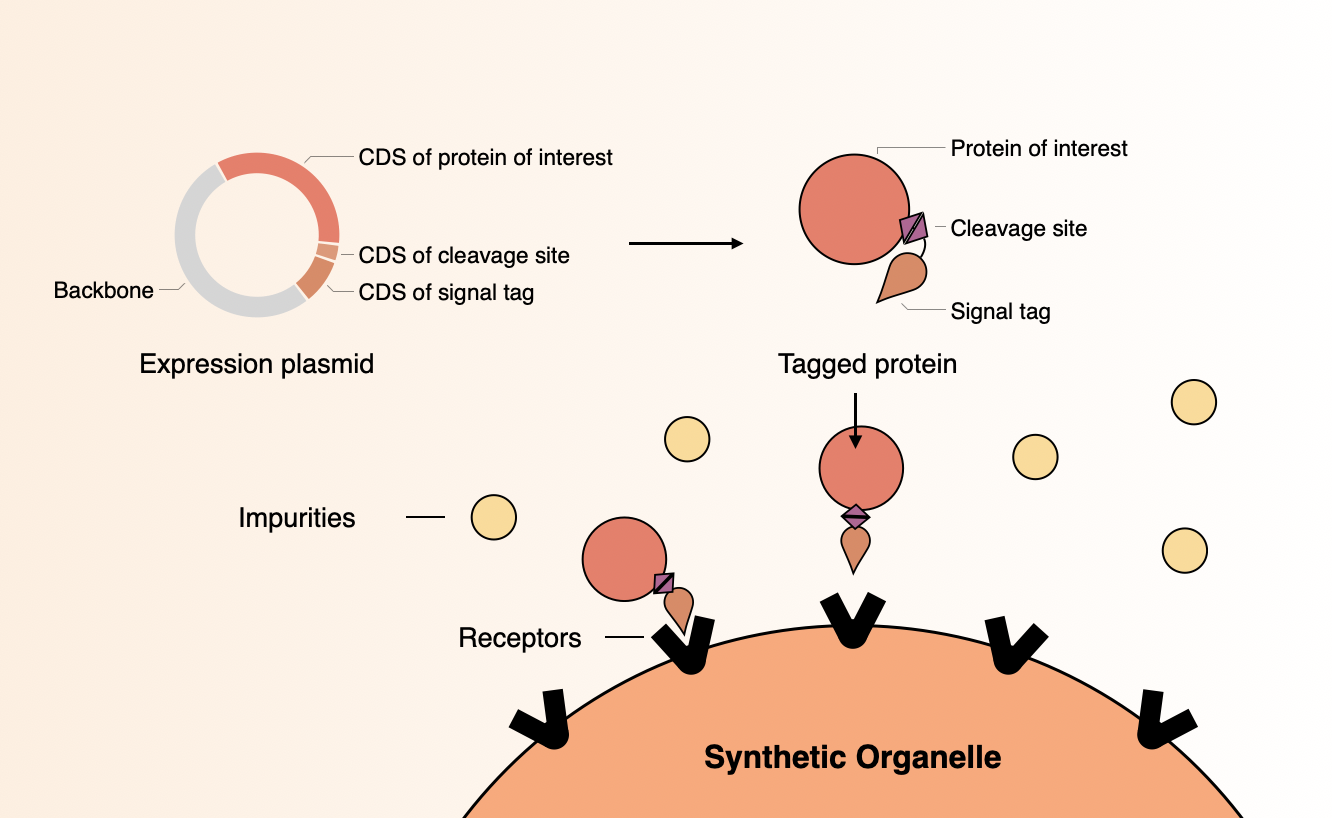
PandaPure Protein Systems were built to address that problem. PandaPure is a column-free protein purification system for E. coli that integrates protein expression, purification, and tag removal into one simpler workflow. Instead of relying on chromatography columns, beads, and external proteases, PandaPure uses a biologically encoded workflow designed to reduce complexity and make purified proteins more accessible to more labs.
The March 2026 release keeps the same core PandaPure workflow while making the system easier to understand and easier to adopt. This release expands the available tag options, updates the reagent format, clarifies package structure, and standardizes released vector naming.
New tag options for PandaPure
One of the biggest practical changes in this release is that PandaPure is no longer presented as a single-tag system. The March 2026 release supports three PandaPure tag options within the same workflow family.
The Classic tag remains the continuity option for researchers who want the established PandaPure route, and an N-terminal fusion format is now also available for proteins that benefit from that design. The Hi-affinity tag expands the design space through a smaller variant derived from the Classic tag and carrying a higher-affinity mutation. The new IEX tag introduces an extremely compact option, a short peptide, for researchers who want a minimal-size tag and more flexibility in construct design.
A representative example in this release is PandaPure Expression Vector Variant #4, pPEV-4, a dual-tag vector that combines an N-terminal IEX tag with a C-terminal Hi-affinity tag in one released design. Researchers can use either tag alone or both tags together by choosing the appropriate restriction sites when cloning the gene of interest into the vector.
Together, these options expand PandaPure from a single-format purification workflow into a broader design platform for protein purification in E. coli.
Getting started with PandaPure
PandaPure aims to make protein purification much easier. Yet it is a true paradigm shift, and that can sometimes feel unfamiliar and take time to adopt.
The March 2026 release is therefore designed to make the system easier to approach.
System offerings
Here we adopt a similar naming logic to what researchers already know.
To start chromatography, you need a chromatography system, for example the ÄKTA start™ chromatography system from Cytiva, which is a complex and expensive machine.
To start PandaPure, you need a PandaPure system, for example the PandaPure Protein System (E. coli), which is a set of DNA plasmids encoding the required components.
For researchers who are new to PandaPure, the Standard Edition is designed for the easiest onboarding experience. It is the main starting point for teams that want the released core PandaPure system with wider vector coverage and included reagent support.
This edition includes the pTEAR-2 organelle plasmid, pPEV-1 through pPEV-4, the pPEX-GFP-1 positive-control plasmid, a full onboarding reagent package at 250 mL scale.
And more importantly, to reduce the onboarding friction, we offer complimentary construct-service support for one target protein within the released service scope, i.e. you submit the sequence, we make the DNA plasmids ready to use!
The previous flagship edition of the PandaPure Protein System, the Lesser Panda Edition, is still provided as a lighter entry package for evaluation and flexible setup. It includes the pTEAR-2 organelle plasmid, the pPEV-2 expression vector, the pPEX-GFP-1 positive-control plasmid, and an onboarding Tag Cleaver component. It is designed for researchers who want to explore the core PandaPure workflow with more freedom to tune conditions themselves.
More broadly, this release strengthens PandaPure's central promise: making protein purification simpler through a programmable biological workflow rather than a chromatography-heavy downstream process.
Reagent upgrade: modular reagent kits
The PandaPure Protein Reagent line is also updated in this release. The active reagent-kit line now uses modular reagent kits (RM001 to RM003), replacing the earlier composite solutions (PR050, PR100, and PR250).
Each released kit supports tag removal and protein recovery through a two-component format built around PandaPure Protein Tag Cleaver and PandaPure Protein Buffer. This update makes the reagent system clearer, easier to configure, and easier to understand across different onboarding routes.
Cleaner vector naming and broader design support
To improve clarity across construct planning, ordering, and documentation, the March 2026 release standardizes naming across released PandaPure assets.
pPEV now refers to a PandaPure expression vector backbone. pPEX refers to an expression plasmid that already carries an inserted gene or control sequence. In practical terms, pPEV is the starting vector, and pPEX is the expression-ready plasmid built from it.
The release also includes optional vector expansion sets for users who want more backbone choices beyond the core system vectors. VP003 supports N-terminal strategies, and VP004 supports C-terminal strategies. These vector sets extend the practical design space of PandaPure while staying within the same overall workflow.
What's next? Upcoming sharing of protocols, case studies, and reports
This release is also the beginning of a broader effort from Ailurus to share more openly and more routinely. Over the coming months, we will publish additional PandaPure workflows, protocols, guides, case studies, and technical materials.
We hope this release marks the start of a more transparent and consistent way of sharing what we build, how it works, and how researchers can use it to accelerate science.
PandaPure Protein Systems are for Research Use Only. They are not intended for diagnostic or clinical use.
To explore the system or discuss construct design for a specific protein target, visit the PandaPure Protein page or contact Ailurus for technical support.